Pillow Guide: How to Find the Right Pillow for Your Sleep Position (and Wake Up Without Neck Pain)
You wake up with neck pain? The problem probably isn't your neck.
Disclosure: This article contains affiliate links. If you make a purchase through these links, we may earn a commission at no extra cost to you. Learn more
This pillow guide answers one question that most people never think to ask: is my pillow actually right for how I sleep? We invest in expensive mattresses, optimize room temperature, and darken the bedroom – then sleep on a pillow that's been worn out for years or doesn't fit our sleep position. The pillow is one of the most underrated factors for restful, pain-free sleep.
The One Rule That Changes Everything
The cervical spine should be an extension of the thoracic spine during sleep – not bent, not overextended. The perfect pillow fills exactly the gap between head and mattress. No more, no less.
The problem: Depending on sleep position, this gap is different sizes. Side sleepers need a higher pillow than back sleepers. Stomach sleepers often need none at all.
Pillows by Sleep Position
For Side Sleepers: Higher Is Better
Side sleepers are the majority – about 60% of people prefer sleeping on their side. Here the distance between head and mattress is greatest. The pillow must completely fill the space between shoulder and head.
Rule of thumb: Pillow height should roughly match shoulder width. For most this means: A side sleeper pillow* with 4-6 inch height, rather firm.
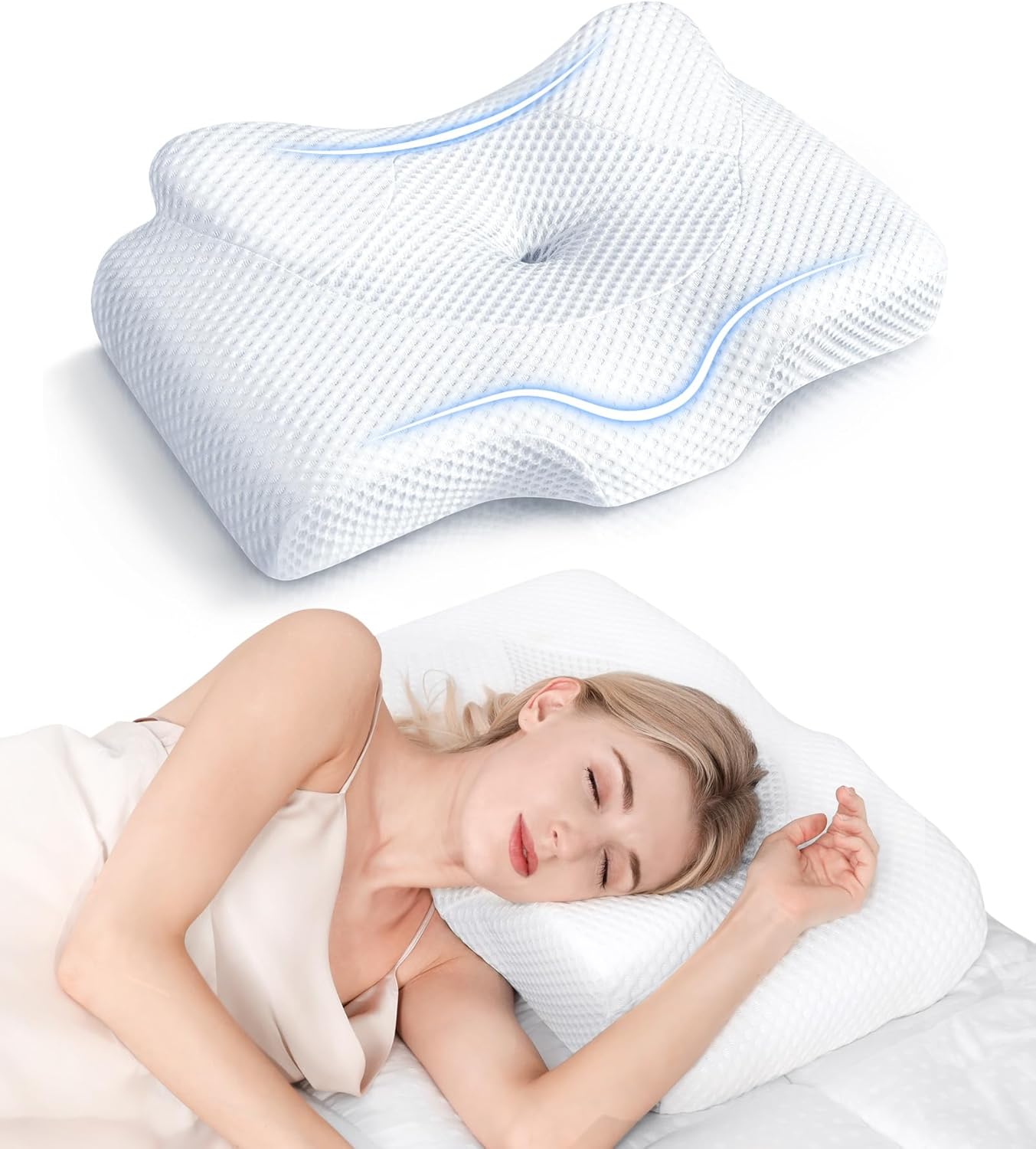
- ✓ Hollow center design reduces head pressure
- ✓ Memory foam with cooling cover
- ✓ Adjustable height inserts
- ✓ Amazon #1 Bestseller in Specialty Pillows
For Back Sleepers: Flat and Supportive
Back sleepers need less height but good neck support. A pillow that's too high pushes the chin to the chest – this narrows airways and can promote snoring.
Ideal are cervical pillows* with a hollow for the back of the head and an elevated curve under the neck. Height: about 3-5 inches.
For Stomach Sleepers: Less Is More
Stomach sleeping is orthopedically the least favorable position – the head is turned to the side all night. A high pillow makes it worse.
If you're a stomach sleeper and can't change: Use a very thin pillow* (under 3 inches) or none at all. Some stomach sleepers place a flat pillow under their stomach to relieve the lumbar spine.
For Combination Sleepers: Adaptable
Those who change positions at night need a pillow that supports various positions. Adjustable pillows* with removable layers can be useful here.
Which Fill Material?
Down and Feathers
Classic, soft, good temperature regulation. Down is fluffier, feathers more supportive. Downside: Can trigger allergies, lose volume over time.
Foam (Memory Foam, Latex)
Shape-retaining, good support, suitable for allergy sufferers. Memory foam responds to body heat and conforms. Downside: Can trap heat.
Polyester / Microfiber
Affordable, washable, allergy-friendly. But: Less breathable, loses shape faster.
Natural Materials (Buckwheat, Millet)
Breathable, natural, individually moldable. Buckwheat is said to have cooling properties. Downside: Takes getting used to, rustles when moving.
When Should a Pillow Be Replaced?
A pillow should be replaced every 1-2 years. Signs of an old pillow:
- Lumps or permanent deformations
- Yellowish discoloration (sweat, skin oils)
- Musty smell despite washing
- The pillow no longer returns to its shape
Quick test: Fold the pillow in half. Does it spring back immediately? Good. Does it stay folded? Time for a new one.
The Right Pillow for Every Sleep Position
Ad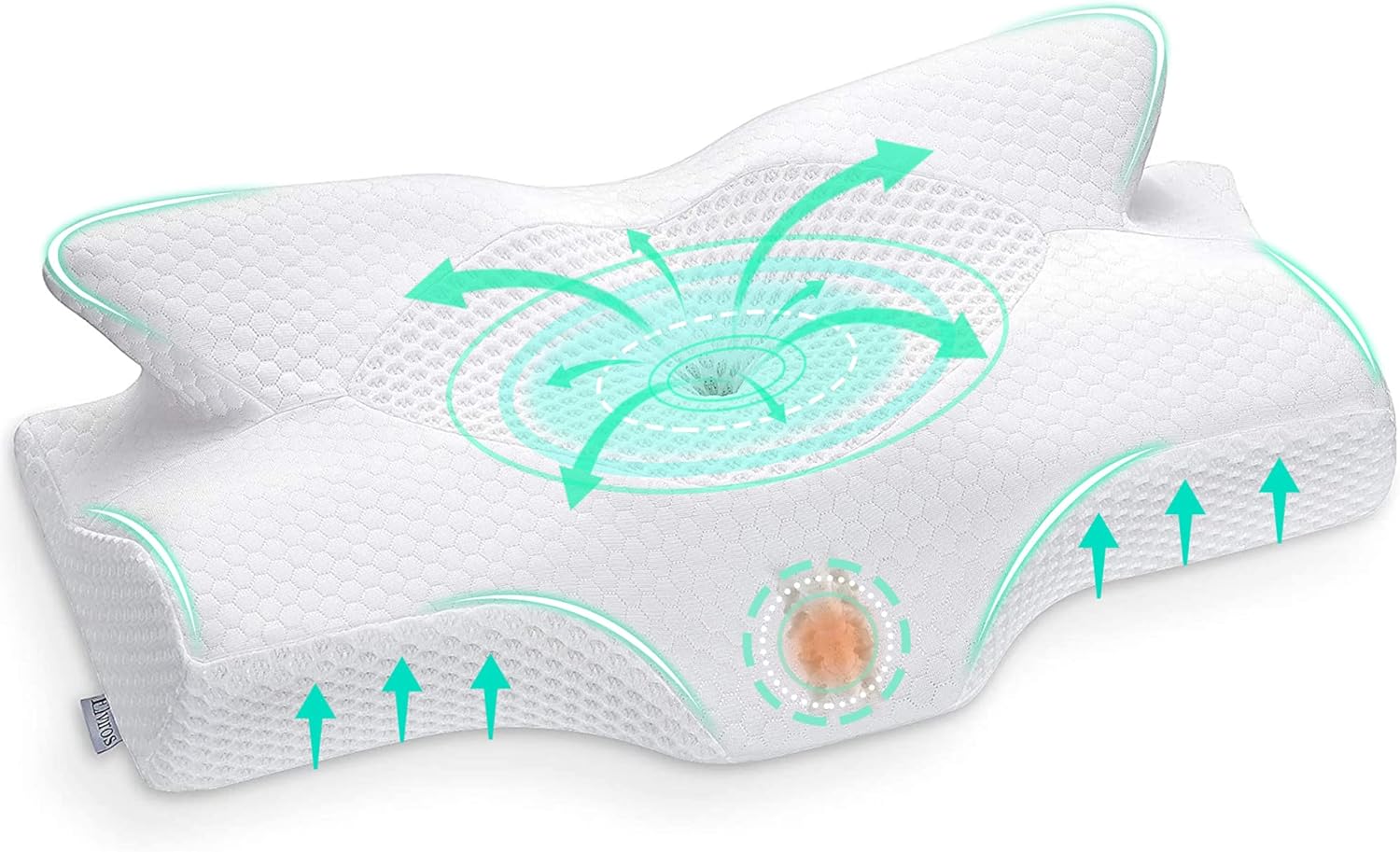
- ✓ Side & back sleepers
- ✓ Dual-height design
- ✓ Ergonomic wings
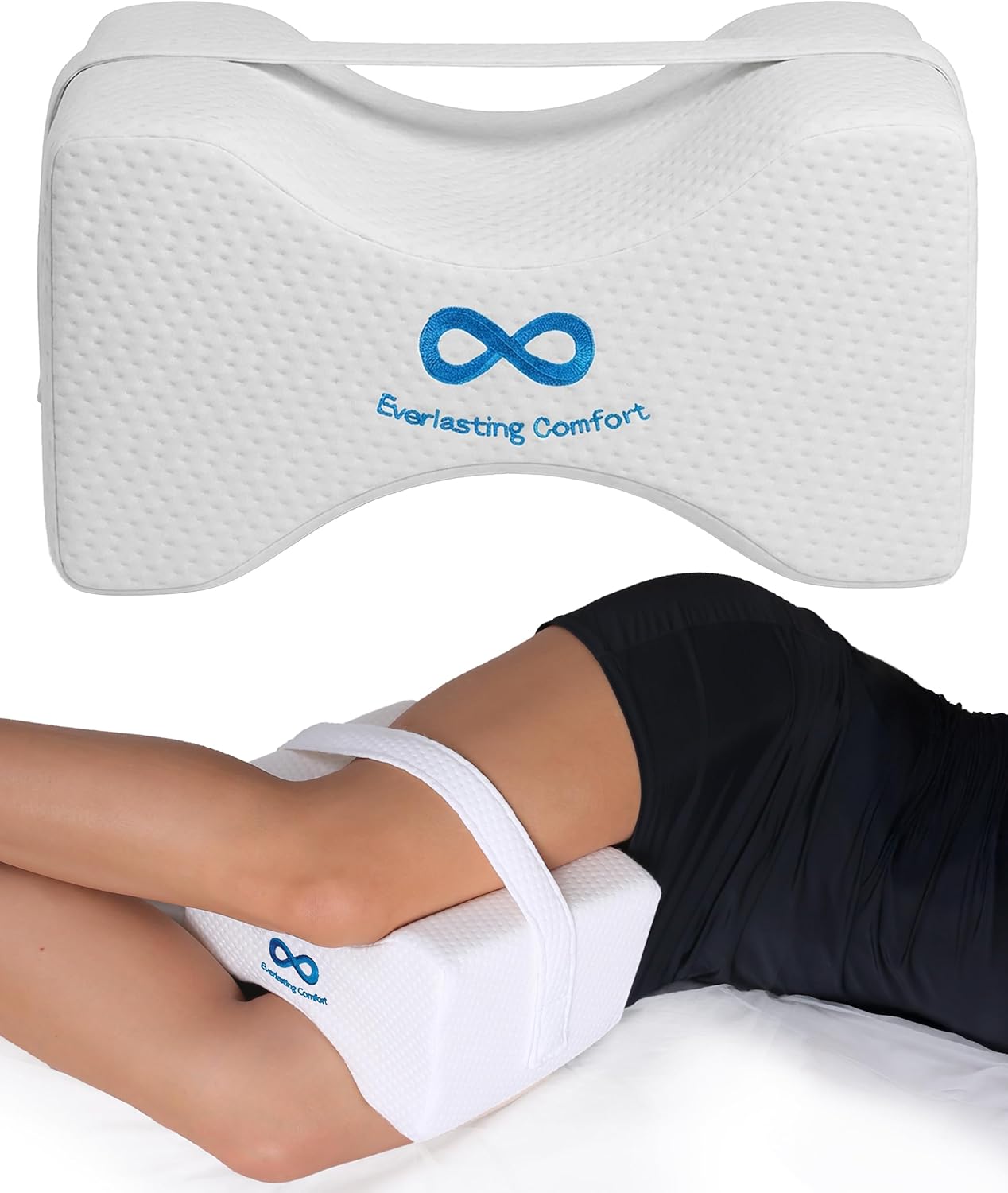
* Affiliate links to Amazon. We may earn a commission on purchases – at no extra cost to you.
Book Recommendation: Sleep Better
More about healthy sleep and the right sleep environment: "Why We Sleep" by Matthew Walker* is the popular science standard work on sleep quality. As an audiobook on Audible* – also perfect for falling asleep.
Read More:
Sources & Further Reading
- Gordon, Susan J., Grimmer-Somers, Karen & Trott, Patricia (2009): Pillow use: the behaviour of cervical pain, sleep quality and pillow comfort in side sleepers. Manual Therapy, 14(6), 671-678. DOI: 10.1016/j.math.2009.02.006
- Ren, Shunyu et al. (2016): Effect of pillow height on the biomechanics of the head-neck complex: investigation of the cranio-cervical pressure and cervical spine alignment. PeerJ, 4, e2397. DOI: 10.7717/peerj.2397
* Affiliate Links: Links marked with * are affiliate links. If you purchase through these links, we receive a small commission – the price for you remains unchanged.