Waking Up for Remote Work: 5 Strategies for a Real Morning Routine Without a Commute
No commute should mean more sleep. So why does it often feel different?
Disclosure: This article contains affiliate links. If you make a purchase through these links, we may earn a commission at no extra cost to you. Learn more
Waking up for remote work without a commute sounds like freedom – and often turns into chaos without the right structure. The theory: Without commuting, you could sleep longer and still be on time. The reality: Somehow you're often more tired working from home than before. Why is that?
The Problem: Missing Structure
The commute to work was annoying, but it had one advantage: It forced you to get up, get dressed, and leave the house. These rituals signaled to your body: It's go time.
Working from home, these signals are missing. The boundary between bedroom and workspace blurs – and so does the line between sleep time and wake time.
Solution 1: Create Artificial Boundaries
Simulate a "commute." This could be a 10-minute walk around the block, a quick workout, or simply: Dress as if you're going to the office. Sounds silly, but it works.
A standing desk* can help separate the work area from the rest of your home. Standing in the morning makes you more alert than sitting.
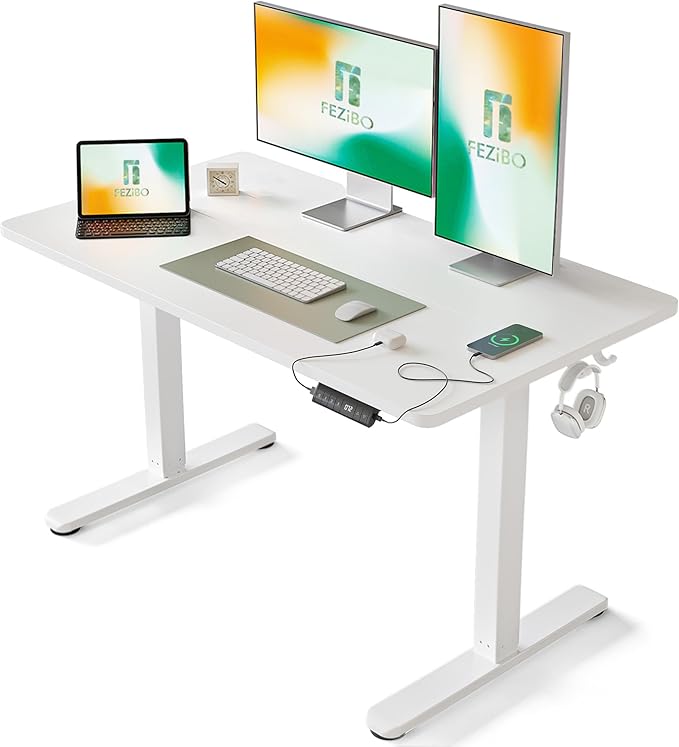
- ✓ Electric height adjustment
- ✓ 48 x 24 inch work surface
- ✓ Memory presets for quick adjustment
- ✓ Sturdy steel frame
Solution 2: Keep Fixed Times
"I can wake up at 8:58 if my first call is at 9" – a mistake many make. Better to wake up at the same time as when you had a commute. Use the gained time for exercise, breakfast, or reading.
Solution 3: Light and Fresh Air in the Morning
In the office, you automatically got daylight. At home, many stay in dark rooms. Open the curtains immediately after waking up and air out the room. In winter, a light therapy lamp* at your desk can help.
Solution 4: The Workspace as Sacred Ground
Never work from bed. Never. The bed is for sleeping. If your brain associates bed = work, you'll sleep worse.
A proper ergonomic office chair* and a separate work area – even if it's just a corner of the living room – can be worth it.
Solution 5: Social Commitments
Before, you had to get up because the boss expected it. At home, that pressure is missing. Join a virtual co-working group or schedule morning calls. The social commitment helps with waking up.
Tools for the Home Office
A few things that make mornings working from home more pleasant:
- Coffee maker with timer* – Coffee is ready when you wake up
- Sunrise alarm clock* – Gentle wake-up instead of harsh beeping
- Noise-cancelling headphones* – For focused work after waking up
- Audible* – Audiobooks and podcasts for lunch break or in the background
- Amazon Music Unlimited* – Focus playlists for concentrated work
With Amazon Prime* you get many of these benefits bundled – including fast delivery for office equipment.
Home Office Essentials
Ad

* Affiliate links to Amazon. We may earn a commission on purchases – at no extra cost to you.
Book Recommendations: Productive at Home
"Deep Work" by Cal Newport* is the standard work for focused work without distraction. For habits and structure, "Atomic Habits" by James Clear* is essential. Both available as audiobooks on Audible* – perfect for the saved commute time.
Frequently Asked Questions
How do I maintain a schedule when working from home?
Why is it harder to wake up on work-from-home days?
What's the best morning routine for remote workers?
Is it bad to work in pajamas from home?
Sources & Further Reading
- Pew Research Center: Remote Work Statistics
- Stanford Institute for Economic Policy Research: Does Working from Home Work?
- OSHA: osha.gov – Workplace Safety
* Affiliate Links: Links marked with * are affiliate links. If you purchase through these links, we receive a small commission – the price for you remains unchanged.